
Mr President, the Red Sea Has Not
Been Crossed in Benue
By Vincent Tortsugh, Esq.
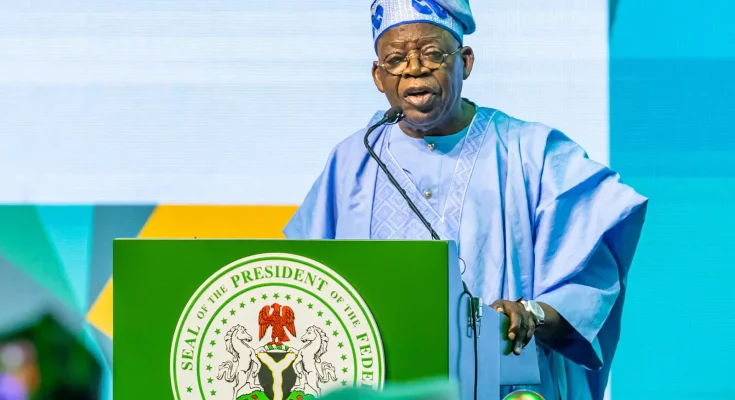
On the morning of our 66th Independence anniversary, President Bola Tinubu told Nigerians that the country has passed through its own Red Sea. The hard part is behind us, he said. The emergency treatment is over. Now begins the age of prosperity, and there is to be no looking back.
You May Also Like
It is a good speech. I mean that sincerely. It is warm in places, honest in a few, and built around a striking image: Nigeria as a cancer patient who chose surgery over morphine. But I read it twice from my chambers in Makurdi, and both times I was struck less by what it said than by what it left out. A speech that asks us to stop looking back owes us an honest account of where we are standing. On three matters, the suffering of ordinary people, the killing fields of the Middle Belt, and the debt now resting on our children, that account is incomplete.
The suffering is real, and it is not only inherited
To his credit, the President admits that the journey has been too hard for too many. He speaks of families struggling for the next meal and the next school fee. Then he moves quickly to say that their circumstances did not begin with his reforms.
That is half true. Nigeria’s poverty problem is old. But the World Bank’s own figures show it got worse on this administration’s watch. Its April 2026 Nigeria Development Update put the poverty rate at 63 per cent in 2025, roughly 140 million Nigerians. That is more people than live in all but a handful of countries on earth. When the Bank published similar projections last year, the government’s answer was to question how the figures should be read. The figures did not change.
Yes, inflation has eased. The National Bureau of Statistics reported headline inflation of 15.39 per cent in August, down from 23.14 per cent a year earlier. That is welcome, and I will not pretend otherwise. But food inflation was still 19.57 per cent, and in Adamawa it was 38.85 per cent. Prices are still rising, only more slowly. For a widow in an IDP camp outside Makurdi, a slower rise in the price of garri she already could not afford is not prosperity. It is a statistic.
The farmer cannot farm on a battlefield
The President’s plan to bring down the cost-of-living rests on the farmer: more irrigation, more dry-season farming, more mechanisation, better storage. He describes a Nigeria “in which the farmer can cultivate his land safely.” I want that Nigeria too. But the word “safely” carries the whole weight of that sentence, and the speech never returns to it.
There is no mention of the killings. Not one sentence on Benue, Plateau, southern Taraba, Kwara or Zamfara. Our armed forces are thanked, and rightly, but the people they are meant to protect are not mourned.
The record of this year alone should have made that silence impossible. Nigeria ranked fourth on the Global Terrorism Index published in March, after terrorism deaths rose 46 per cent in 2025. Amnesty International counted at least 323 people killed in rural communities across six states, Benue among them, in just three weeks of February. In its report marking the President’s second year in office, Amnesty put Benue’s death toll at 6,896, the highest of any state it studied. On 16 August, about 30 more people were reported killed in Benue in a single attack.
I have spent much of my practice representing these communities: families driven off ancestral land, villages blockaded, farmers who may never see their farms again. Here is the plain economics the speech avoids. Benue is called the food basket of the nation for a reason. When farmers in Mbalom, Tse Ameen and Yelwata are killed or chased into camps, food does not get cheaper. You cannot irrigate land you are not allowed to return to. A cost-of-living plan that depends on the farmer, but says nothing about the men with guns standing between the farmer and his farm, is not a plan. It is a hope.
The debt the speech forgot to mention
The word “debt” does not appear anywhere in the address. Instead, we are told that our foundations are strong and that Nigeria now moves forward from a position of strength.
The Debt Management Office tells a different story. When this administration took office, total public debt stood at N87.38 trillion as of June 2023. By June 2026 it had reached N166.79 trillion. Some of that increase is the effect of devaluation on our foreign loans, and fairness requires saying so. But even measured in dollars, the debt has grown, to about $120.93 billion.
The total is not the real worry. The cost of servicing it is. The IMF projects that interest payments will consume 53.7 per cent of federal revenue this year. Put simply, more than half of what government earns goes to creditors before a single classroom, clinic or irrigation scheme is funded. BudgIT’s analysis of the 2026 budget found that government can pay for only about 54 per cent of its spending from actual revenue. The rest is borrowed.
Every promise in the speech, the roads, the railways, the primary healthcare, the factories brought back to life, must be paid for out of what remains. A government confident in its foundations should be willing to show the nation that ledger, not leave it out of the anniversary address.
On “regressive voices”
There is a line in the speech that troubles me as a lawyer and as a citizen. The President warns against “certain influential but regressive voices” who would have us abandon the treatment. The Red Sea image does the same work more gently: those who look back are cast as the Israelites who longed for Egypt.
But asking how many people died this year in Benue is not looking back. Asking what share of revenue goes to debt is not a siren song. These are the questions citizens are supposed to ask in a democracy, sixty-six years after we won the right to ask them. A patient is entitled to ask his doctor whether the treatment is working, and the doctor has no business calling him regressive for asking.
What fairness requires
I do not argue that reform was unnecessary. The petrol subsidy was a bleeding wound, and the old exchange-rate system rewarded arbitrage over production. The IMF still rates Nigeria’s risk of debt distress as moderate, and the insecurity in the Middle Belt began long before 2023. All of that is true.
But the President chose to frame this anniversary as the end of sacrifice and the beginning of reward. For 140 million poor Nigerians, for the displaced of Benue and Taraba, and for the generation that will repay N166 trillion, the sacrifice is not over. The Red Sea has not been crossed in Benue. In too many of our villages, it is still red.
If prosperity is to mean anything, it must begin with three things the speech did not offer: an honest security plan for the Middle Belt that allows displaced farmers to go home; a public account of the debt and how it will be serviced without starving development; and a measure of success that counts people, not just percentages. Then, and only then, can we begin to talk of the Promised Land.
By Vincent Tortsugh, Esq.
Vincent Tortsugh, Esq. is Principal Counsel at Sonter Chambers, Makurdi, Benue State.