
WACHEF Leads Stakeholders to Mark World Clubfoot Day in Taraba, Calls for Early Detection and Treatment
By Christiana Babayo.
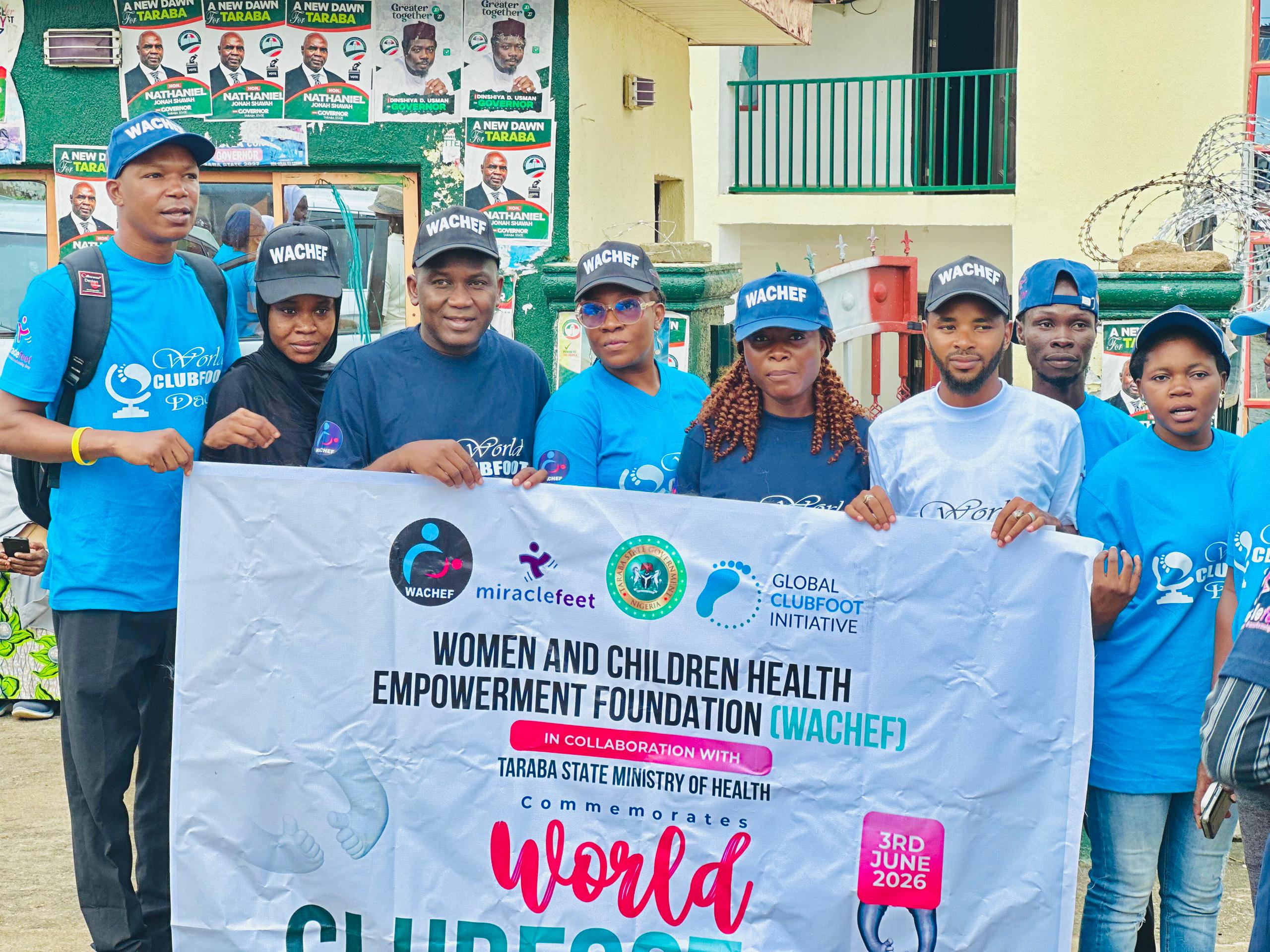
The Women and Children Health Empowerment Foundation (WACHEF), in partnership with MiracleFeet, on Wednesday joined the global community to commemorate World Clubfoot Day in Jalingo, with a renewed call for increased awareness, early diagnosis, and timely treatment of children born with clubfoot.
You May Also Like
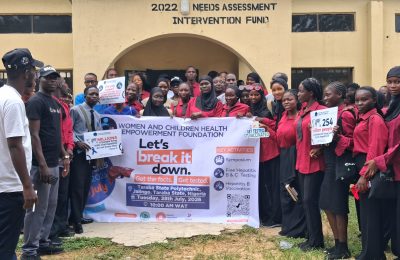
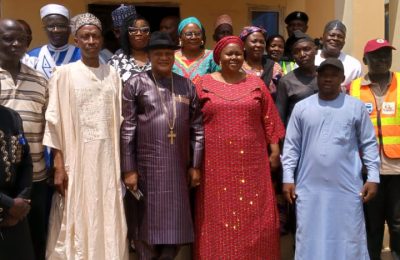
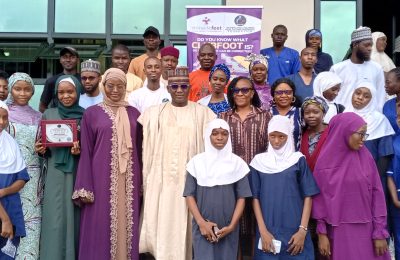
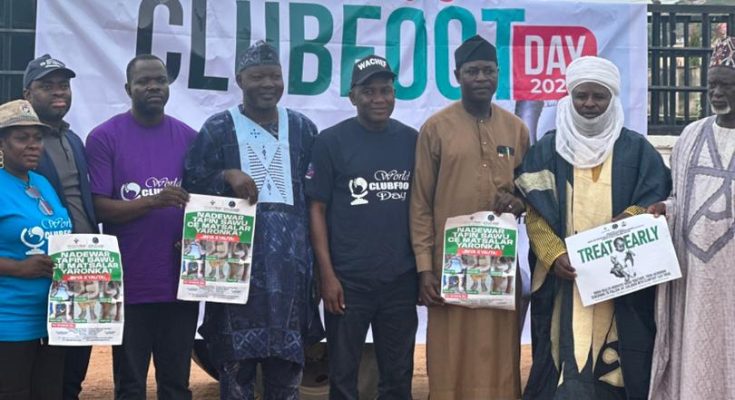
The event commenced with a road walk from the PDP Secretariat to Afolahan Square and attracted a broad spectrum of stakeholders, including government officials, healthcare professionals, development partners, traditional rulers, religious leaders, security agencies, and representatives of persons living with disabilities.
Speaking during the event, the Chairman of WACHEF’s Board of Trustees, Dr. Garba Danjuma, reaffirmed the organisation’s commitment to improving healthcare delivery and ensuring that children born with clubfoot receive the care they need.
He noted that through its partnership with MiracleFeet, WACHEF has continued to champion community awareness, early detection, and prompt treatment of clubfoot across Taraba State.
“No child should be deprived of the opportunity to live a healthy and productive life because of a condition that is both treatable and preventable from causing lifelong disability.” Dr Danjuma said.
Dr. Danjuma disclosed that free clubfoot treatment services are currently available at the Federal Medical Centre (FMC), Jalingo, and the Federal University Teaching Hospital (FUTH), Wukari, urging parents and caregivers to take advantage of the facilities.
The Executive Director of WACHEF, Mrs Beden Mergu Barnabas, provided an overview of clubfoot, explaining its causes and the long-term consequences for affected children if left untreated.
She emphasized the importance of early intervention, noting that treatment is most effective when commenced shortly after birth.
In his keynote address, the Permanent Secretary of the Taraba State Ministry of Health highlighted the growing burden of clubfoot in Nigeria and called on residents to embrace the free treatment opportunities being provided through the WACHEF-MiracleFeet partnership.
“Nigeria is estimated to record over 10,000 new clubfoot births annually. Global incidence is about one to seven cases per 1,000 births, but studies suggest the burden in Nigeria is disproportionately high because many children remain untreated,” he said.
He added that,“While it may appear challenging, the good news is that clubfoot is treatable, and when detected early and managed appropriately, affected children can grow up to walk, run, play, and live productive lives just like their peers.”
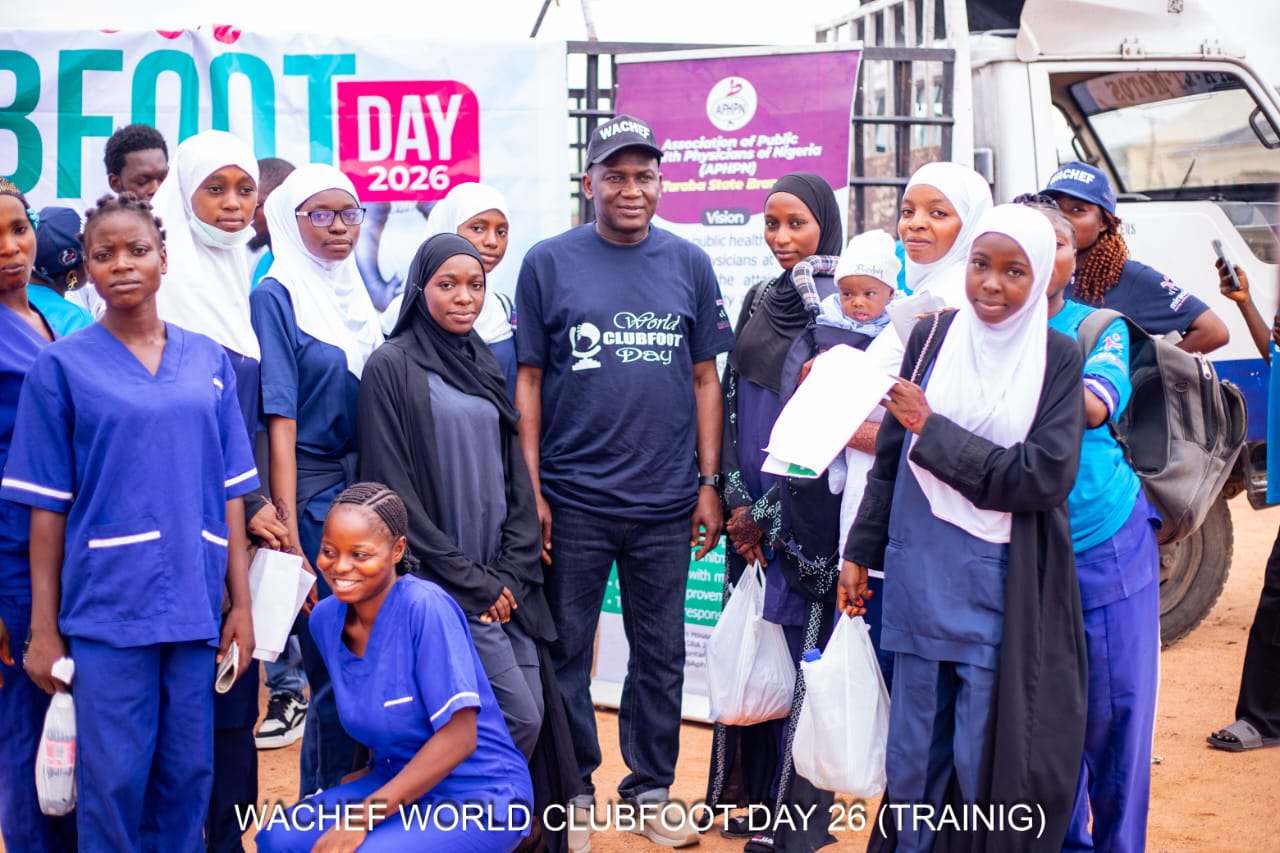
The event also featured goodwill messages from representatives of the Jalingo Local Government Council, led by the Vice Chairman, the Emirate Council represented by the Sintalin Muri, the Taraba State Ministry of Health, the Taraba State Primary Health Care Development Agency (TSPHCDA), the World Health Organization (WHO), and other stakeholders.
They underscored the importance of sustained sensitization campaigns and pledged their support toward strengthening community awareness, improving referral systems, and ensuring that more children with clubfoot are identified early and linked to treatment centres.
Other organisations represented at the event included the Taraba State Hospitals Services Management Board (TSHMB), the National Association of Nigerian Nurses and Midwives (NANNM), the Federation of Muslim Women’s Associations in Nigeria (FOMWAN), the Christian Association of Nigeria (CAN), the Ministry of Women Affairs and Child Development, and associations of Persons Living With Disabilities (PLWDs).
Stakeholders collectively reaffirmed their commitment to supporting initiatives that improve access to quality healthcare services and eliminate barriers that prevent children with clubfoot from receiving treatment.
The World Clubfoot Day commemoration served as an opportunity to celebrate progress made in clubfoot care while renewing commitments to expand access to treatment and support services for affected children and their families.