
Peace Bureau Seeks Community Support to Tackle Insecurity in Ussa
By Christiana Babayo
The Taraba State Bureau for Peace and Conflict Management has called on residents of Ussa Local Government Area to support government efforts aimed at addressing insecurity and sustaining peace across the state.
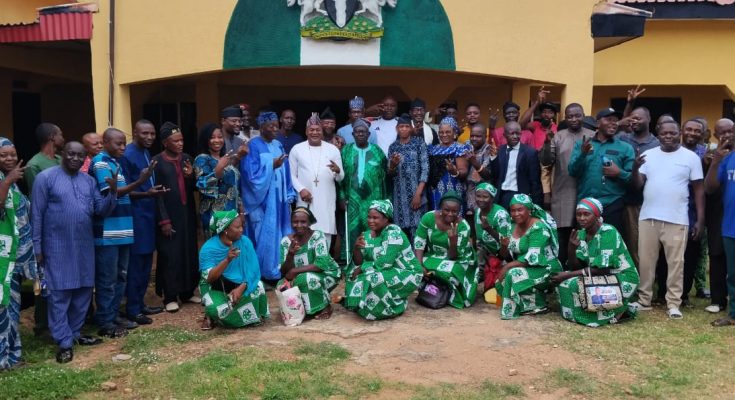
The Director General of the Bureau, Bishop Innocent Rubiruka Solomon, made the appeal during a Town Hall meeting with stakeholders in Lissam, the headquarters of Ussa Local Government Area, as part of the Bureau’s statewide sensitization tour.
You May Also Like
Bishop Solomon stressed that tackling the security challenges facing Taraba State requires collective action from all segments of society and not the government alone.
“All of you know that Taraba State has suffered a lot in terms of conflicts. One of the key setbacks why Taraba has refused to develop and meet up with other states is because conflicts leads in our communities. From one community to another, from one tribe to another tribe. Virtually, all tribes in Taraba have fought wars and this has brought tremendous setbacks to the development of the state. Even in Ussa, you know, it is crisis upon crisis, and this has slowed down the pace of development. We all bear witnesses. A lot of properties, a lot of homes, a lot of lives that have been lost, you can’t recover it. And it has happened over and over again. So, it has been a sad experience for the state. And most times, past governments will only set up committees to look at it and put up some recommendations and sometimes, that is all”.
He said Governor Agbu Kefas had taken a different approach by establishing the Taraba State Bureau for Peace and Conflict Management to provide institutional mechanisms for preventing and resolving conflicts.

According to him, the governor is the first in the state’s history to create an institution dedicated to managing conflicts through prevention, mediation, dialogue, restoration, and transformation.
Bishop Solomon explained that the Bureau is empowered to intervene wherever conflicts arise by facilitating dialogue and promoting understanding among parties involved.
He noted that the governor’s objective is to ensure that all Tarabans live peacefully and fully benefit from the state’s abundant resources and opportunities.
The Director General further disclosed that shortly after its inauguration, the Bureau conducted a comprehensive crisis and conflict assessment across the state with the support of the Institute for Peace and Conflict Resolution (IPCR), Abuja.
The findings of the assessment, he said, informed the development of a five-year strategic plan designed to guide the Bureau’s interventions and peacebuilding activities.
He explained that the visit to Ussa was aimed at sensitizing residents on the Bureau’s mandate and engaging the local government on the establishment of a Peace Committee in line with the law establishing the Bureau.
Bishop Solomon urged residents to coexist peacefully with one another and neighboring communities, describing peace as a prerequisite for sustainable development and a key aspiration of Governor Kefas’ administration.
In his welcome remarks, the Leader of the Ussa Local Government Legislative Council, Hon. Uresati Usman, expressed confidence that the establishment of the Bureau would contribute significantly to addressing the security challenges confronting the area.
Hon. Usman, who represented the Chairman of the Local Government, Hon. Abershi Musa, pledged the support of the council and the people of Ussa to the activities and programmes of the Bureau.
During the interactive session, participants commended Governor Kefas for demonstrating concern over the security situation in the area and for encouraging residents to put past grievances behind them. Many of the speakers observed that the Bureau’s establishment was a welcome development and expressed the view that such an institution should have been created much earlier.
They recalled that years of insecurity had forced many residents to flee their communities and abandon their homes and farmlands, but noted that recent government interventions had enabled people to return and engage in farming activities in relative peace.
The stakeholders identified challenges such as the porous international border, farmer-herder conflicts, and communal clashes as issues requiring continued attention. They also applauded the governor’s decision to re-engage workers previously classified as ghost workers and called for increased youth employment opportunities as a strategy for reducing crime.
Earlier, Bishop Solomon paid a courtesy visit to the leadership of the local government, where he reiterated the need for communities to support Governor Kefas’ peace initiatives to accelerate development across the state.
Responding, Hon. Uresati Usman assured the Bureau of the continued support of the people of Ussa for the governor’s efforts to promote peace, security, and stability throughout Taraba State.